
Active Warrants in Cleveland County
A warrant is a court order. It authorizes an arrest, a search, or another action named in the signed document. In Cleveland County, most state-level warrants are issued by District Court judges in Judicial District 21, which covers Cleveland, Garvin, and McClain Counties. The Cleveland County Sheriff's Office then receives, enters, and serves those orders. The Cleveland County Sheriff's Office is the agency that holds the county warrant file and runs the official online check.
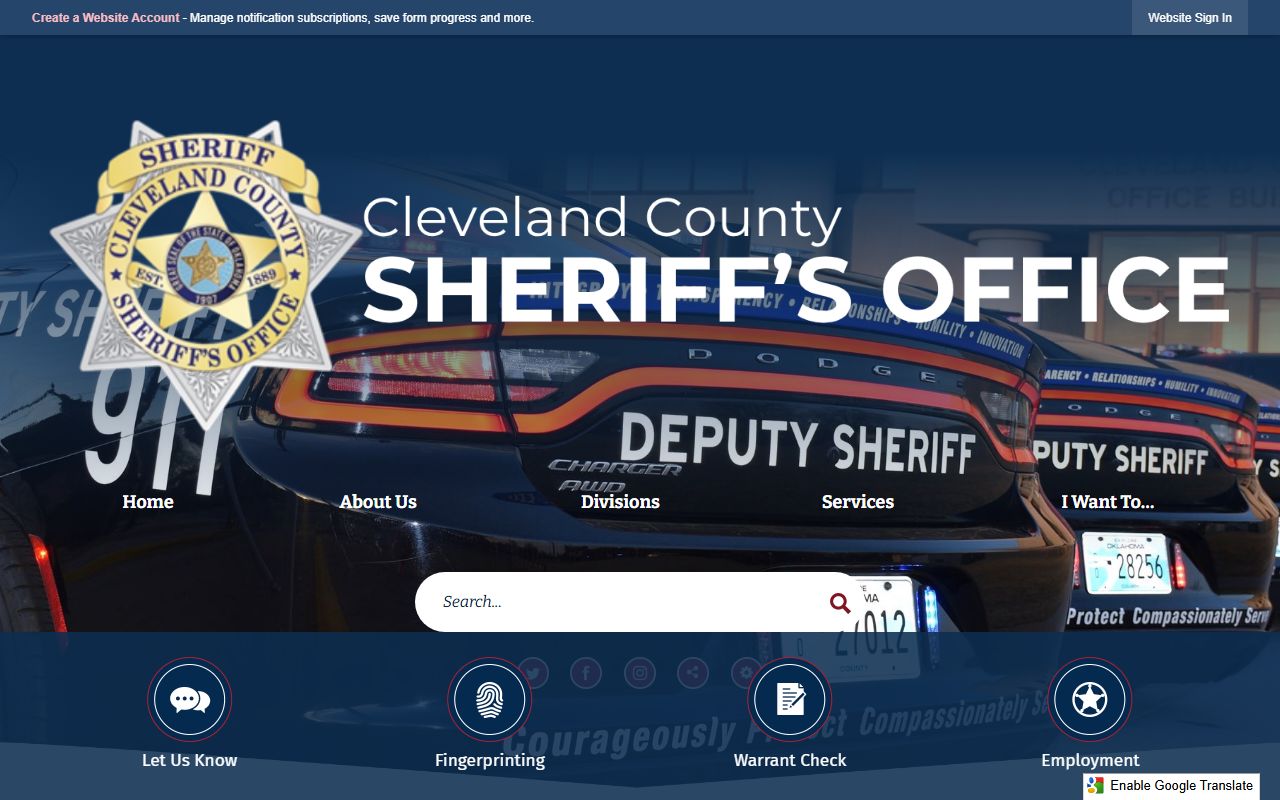
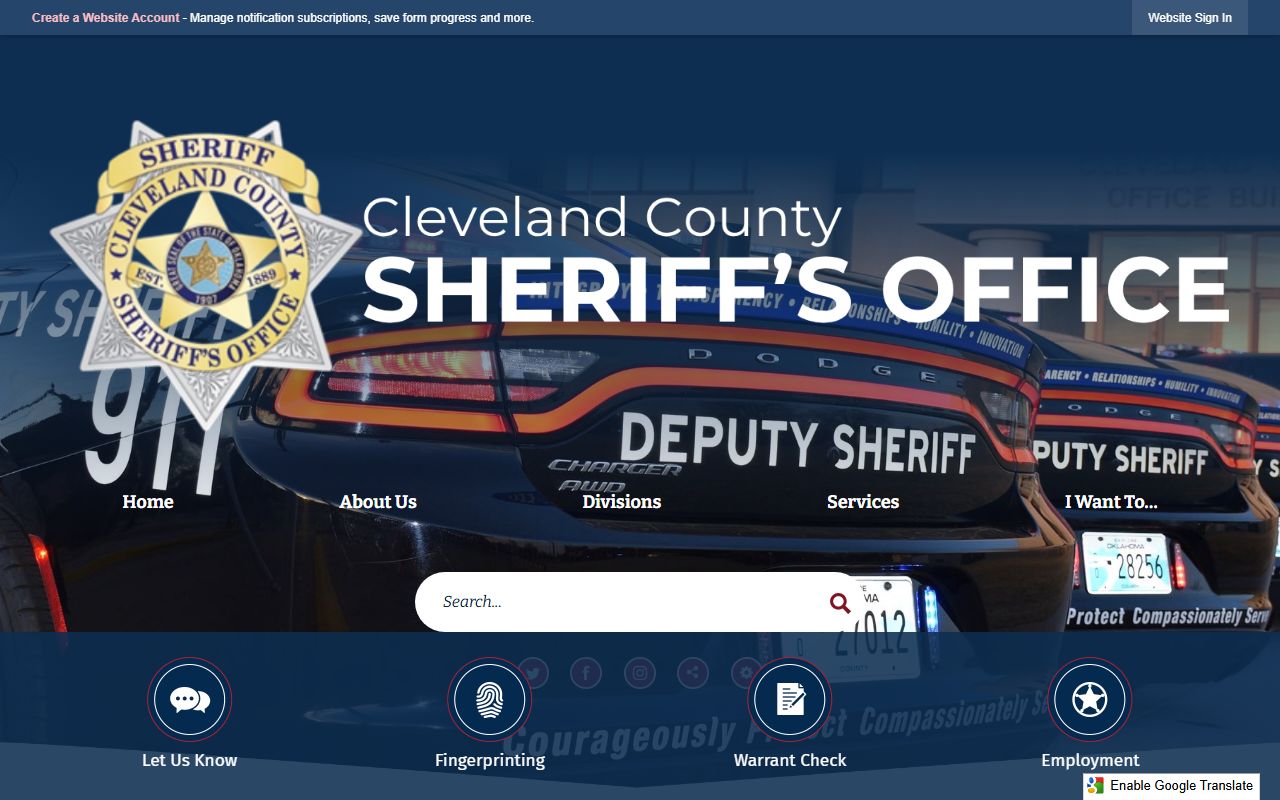
The Sheriff's Office links a Warrant Check portal from its detention-center page and its main quick links. During research the portal was observed in a maintenance and null-configuration state, so a live public result list was not confirmed. That status can change, and the portal remains the official online path even when it returns a maintenance screen. The underlying warrant records still live with the Sheriff and the issuing court, so a phone call or records request reaches the same data when the website is down.
Types of Cleveland County Warrants
Not every warrant starts the same way. Some are built from a police investigation. Others are signed by a judge inside an open case. The label on a Cleveland County warrant tells you which office to contact and what usually clears it.
- Arrest warrant - issued after law enforcement or a prosecutor shows a judge probable cause that a person committed a crime.
- Bench warrant - issued by a judge from the bench when a person misses a scheduled court date or fails to obey a court order.
- Search warrant - authorizes officers to search a specific place or item described in the order, separate from any arrest.
- Capias or failure-to-appear warrant - a hold ordered when a defendant does not appear or does not pay as the court directed.
How to Check for a Cleveland County Warrant
The Sheriff's Office is the starting point for a county warrant check. Its Warrant Check portal is the official online tool, hosted on the Zuercher platform and linked from the Sheriff's quick links. When the portal is in maintenance, the phone lines and the District Court case search fill the gap. Bench warrants tied to a court case are also visible through the statewide case search.
- Open the Cleveland County Sheriff's Warrant Check portal and search by name when the tool is live.
- If the portal shows a maintenance screen, call the Sheriff's Office main line at 405-701-8888 and choose the records option.
- For a warrant tied to a District Court case, search the case on OSCN and select Cleveland County District Court.
- For a city case, use the Norman or Moore municipal court search, since those warrants are not in the county system.
Cleveland County Warrant Search Fields
The Sheriff's Warrant Check portal is built to search and filter by personal identifiers. The fields below were drawn from the portal bundle and configuration observed during research. Because the tool was in maintenance, no live result set confirmed the exact form layout, so treat the field list as the documented search inputs rather than a guaranteed live screen.
| Field Label | Type | Required | Notes |
|---|---|---|---|
| Name | Text | Yes | Primary search input supported by the portal search parameters. |
| Race | Filter | No | Filter option built into the portal configuration. |
| Sex | Filter | No | Filter option built into the portal configuration. |
| Date of Birth or Age Range | Date / Filter | No | Narrows results when a common name returns several entries. |
What a Cleveland County Warrant Record Shows
A warrant result is meant to confirm identity and the basic facts of the order, not to replace the full court file. The fields below come from the Warrant Check portal bundle and result columns documented in research. No live record was captured while the portal sat in maintenance, so the case number and issuing court are best confirmed in OSCN or directly with the court or Sheriff.
| Field | What It Shows |
|---|---|
| Name | Full name of the person named in the warrant. |
| Race and Sex | Physical descriptors used to match the right person. |
| Date of Birth or Age Range | Identifier that separates people who share a name. |
| Date Issued | The date the warrant was signed and entered. |
| Bond Amount | The amount, if any, set for release on the warrant. |
| Charge | The offense or reason the warrant was issued. |
| Case Number / Issuing Court | Links the warrant to a court case when one exists; confirm in OSCN. |
Cleveland County Bench Warrants and the District Court
Bench warrants come from the courtroom, not from a new investigation. A judge issues one when a defendant skips a hearing, ignores an order, or falls behind on court-ordered payments. These orders attach to a case already filed in Cleveland County District Court, so the fastest way to confirm one is through the court rather than the jail.
The Cleveland County Court Clerk can confirm court dates and case status by phone at 405-321-6402. The free statewide case search on OSCN shows the same docket events for Cleveland County District Court matters. A bench warrant often rides along with a larger file, and the full charge history, pleas, and disposition sit in the Cleveland County criminal court records. Checking the docket before contacting the court tells you the case number, the judge, and the next scheduled date.
Municipal Warrants in Norman and Moore
City warrants are a separate system from county District Court warrants. Norman Municipal Court and Moore Municipal Court handle city ordinance, parking, and municipal traffic cases, and each runs its own online lookup. A municipal warrant will not appear in the county Sheriff's Warrant Check, and a county bench warrant will not appear in a city search, so the city of issue decides where to look.
The Norman municipal court search lets a user change the search-by option to Name or Driver's License to look for a warrant. The same portal handles citation, vehicle tag, and name lookups for Norman city cases.
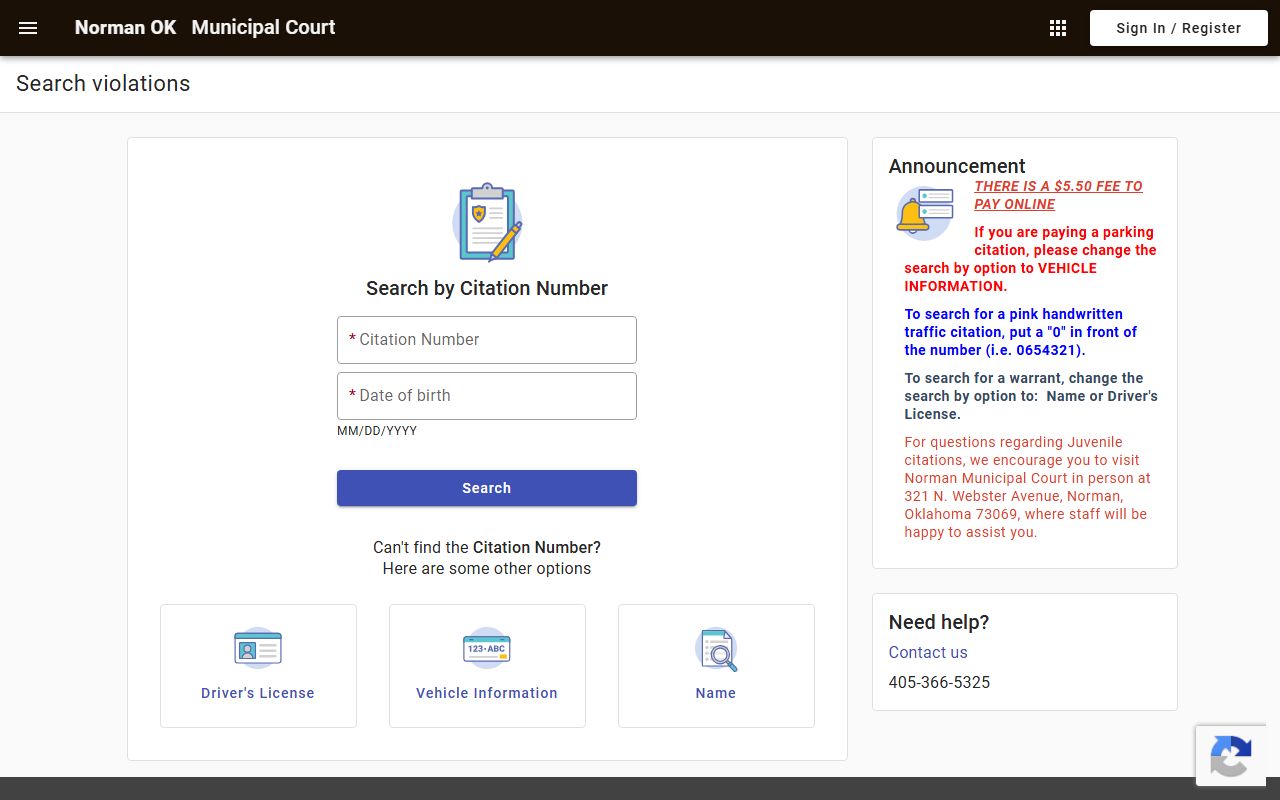
Moore runs a parallel tool. The Moore municipal court search allows lookups by citation number with date of birth, by first and last name with date of birth, by business name, and by driver's license. Moore notes that personal checks are accepted only when a case is not in warrant status.
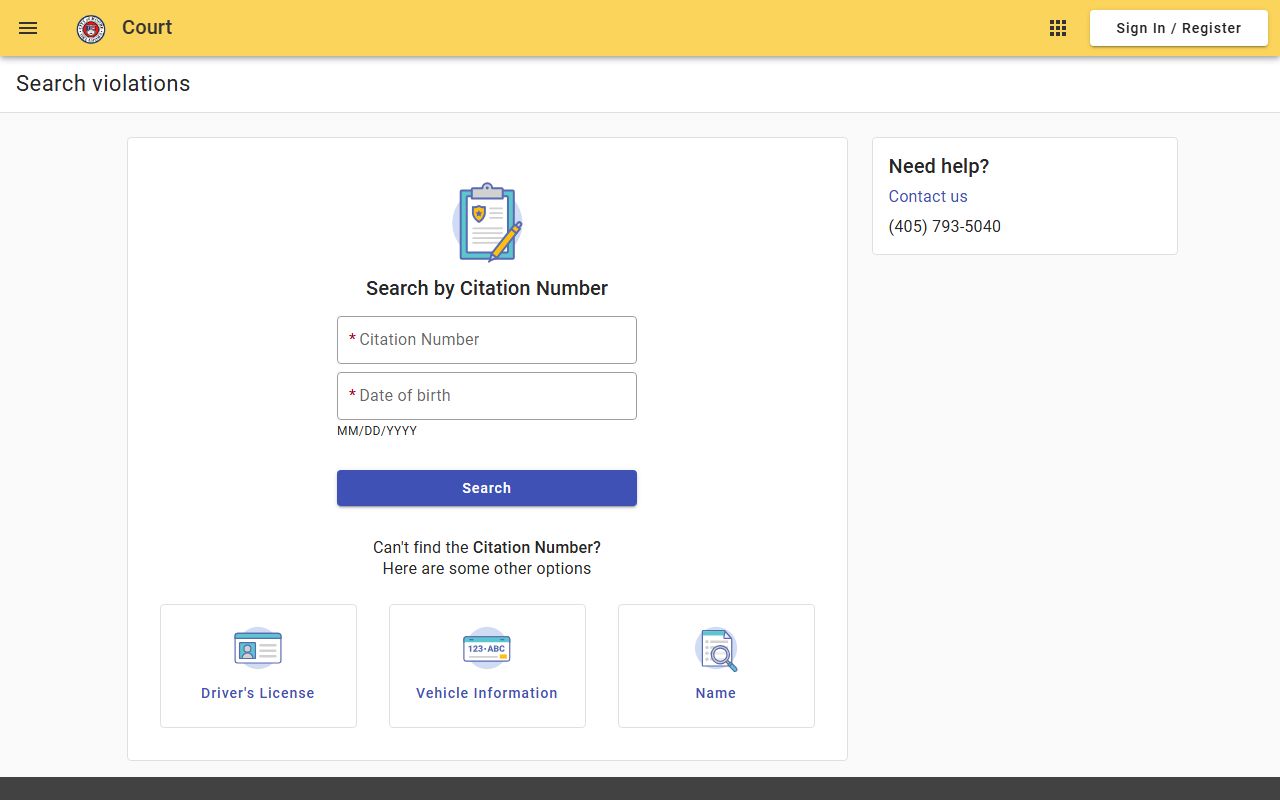
Because a name can sit in more than one system, it is worth checking the county portal, OSCN, and both city tools when the issuing court is unknown.
Sheriff Phone Lines and Records Requests
When the online portal is down, the Sheriff's Office still answers by phone. The main Sheriff's Office line is 405-701-8888, and the records option on the menu is option 6. The Civil Department, which handles civil process such as orders and summons, is reached at 405-701-8740. These lines are the dependable fallback when a warrant check needs a person rather than a screen.
The Sheriff's Records Office keeps the original reports and handles releasable records in person and by request. The office sells report copies for $5, provides them free to crime victims, and runs local background checks for $5 that cover only Cleveland County Sheriff's Office records.
Anyone already arrested on a warrant moves into the jail system, and current custody status shows on the Cleveland County inmate search. The records office is the right channel for warrant and report information that is public and releasable.
Cleveland County Sheriff's Records Office
2600 W. Franklin Road
Norman, OK 73069
Main: 405-701-8888 (Records option 6)
Civil Department: 405-701-8740
Mon-Fri 8:00 a.m.-5:00 p.m.
What to Do If You Have an Outstanding Warrant
An outstanding warrant does not go away on its own. The right move depends on which court issued it and whether bond, a payment, or a new hearing date will clear it. The Sheriff's FAQ answers common questions about court dates, release timing, and how the jail handles people who come in. Confirm the issuing court before acting, then follow these steps.
- Confirm whether the warrant is county or state court versus municipal, using the Sheriff's Warrant Check, OSCN, and the city court lookup.
- If the warrant is tied to a Cleveland County District Court case, call the Court Clerk at 405-321-6402 or search OSCN for court dates and docket status.
- If the warrant is from Norman or Moore Municipal Court, use the city search, payment, and court phone rather than the county Court Clerk.
- Ask the court or Sheriff whether bond, a court appearance, or a new hearing date is required.
- Do not rely on online payment alone when a case is in warrant status, since some city payment options exclude warrant cases.
- If you plan to turn yourself in, contact the correct law enforcement or court office first for current procedures.
Important: Speak with a licensed attorney before turning yourself in, since a lawyer can arrange a bond, a hearing date, or a surrender on terms that protect your rights.
Crime Stoppers and Anonymous Tips
People who want to report a wanted person can share information without giving their name. The Cleveland County Sheriff's Office runs a Crime Stoppers program that takes tips by phone, web, and mobile app. Anonymous tips help locate people named in active warrants and can qualify for rewards.
The Crime Stoppers tip page lists three ways to reach the program. Tips go to 405-366-STOP (7867), to the web form at www.p3TIPS.com/1323, or through the free P3 mobile app.
The same tip tools also appear inside the Cleveland County Sheriff mobile app, which carries a Submit a Tip feature alongside its other public-safety links.
Sealed and Nonpublic Cleveland County Warrants
Not every warrant is open to public view. Some are sealed by the court, and others sit outside the county system entirely. A sealed warrant may not appear in a public search even when it is active.
Juvenile matters are restricted, and the Sheriff's portal configuration is set to keep juvenile records out of public view. Federal warrants are handled by federal authorities, not the Cleveland County Sheriff, so they will not show in the county check. Records tied to a case that has been expunged are sealed from public access under Oklahoma law, which means a once-public warrant can disappear from the file after a court orders the case sealed. For a warrant connected to a case that does not appear online, the Court Clerk and the Sheriff's Records Office can confirm whether the record is confidential or simply not yet indexed.